Climate Postcards workshops generate diverse visual, qualitative, and quantitative data. Each piece of data tells a part of our unique and shared experiences with a changing climate.
In spring 2026, University of Arizona students, staff, and faculty were invited to reflect on climate change through creative self-expression and dialogue in a workshop setting. Participants (n = 25) created postcards in response to the prompt: “In thinking about climate change, what place—real or imagined, in the past, present, or future—would you like to share with someone else?”
Participants then discussed their art, artmaking process, personal climate impacts, and emotional responses to climate change through interviews, group discussions, and a survey. The following panels detail a preliminary analysis of the postcards and the dialogue that followed the artmaking.
Data Analysis

Art Themes & Meaning
What did you draw? What does it mean to you? To whom, what, or where did you address your postcard?
Art Themes
Key Takeaways
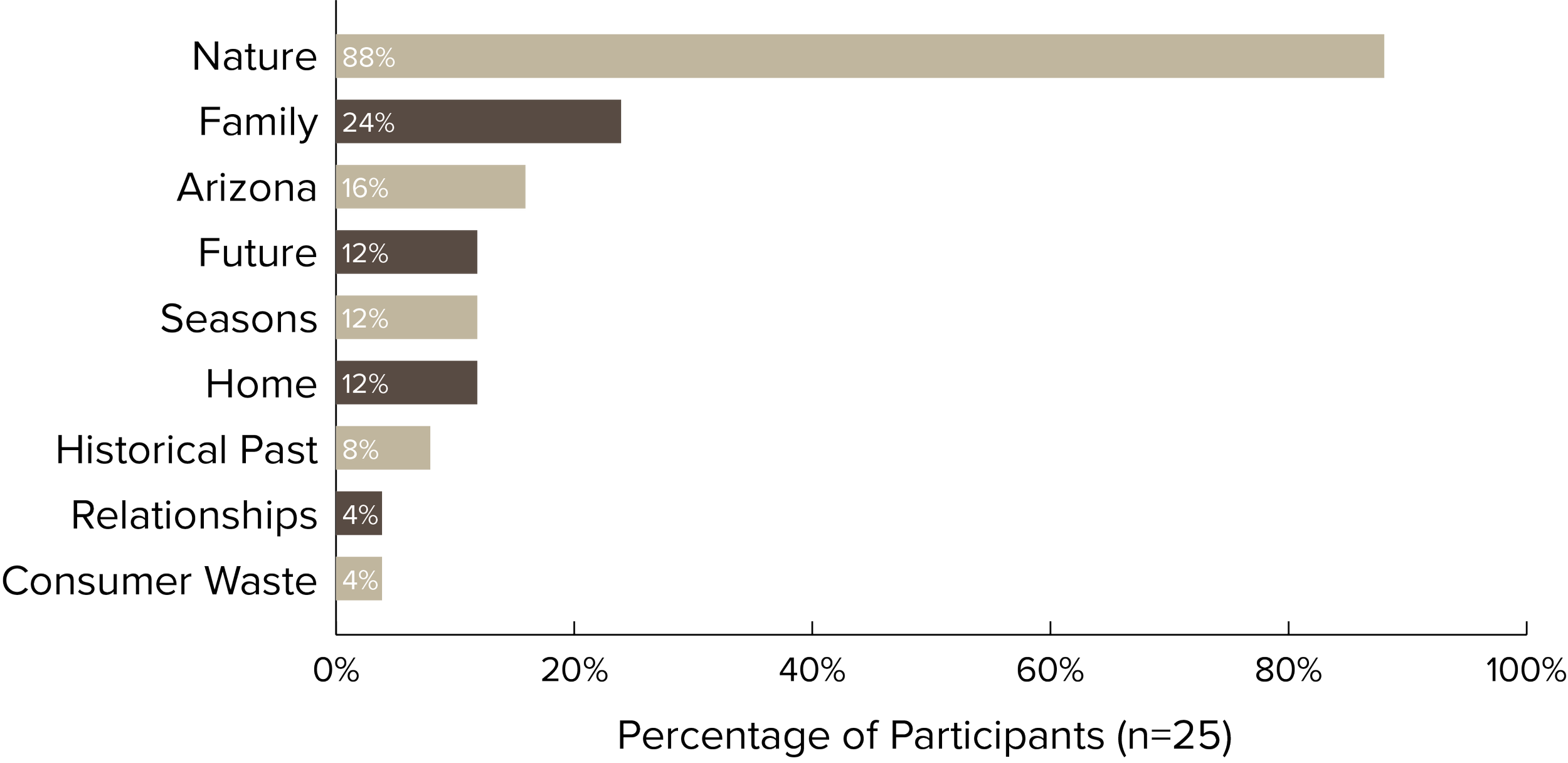
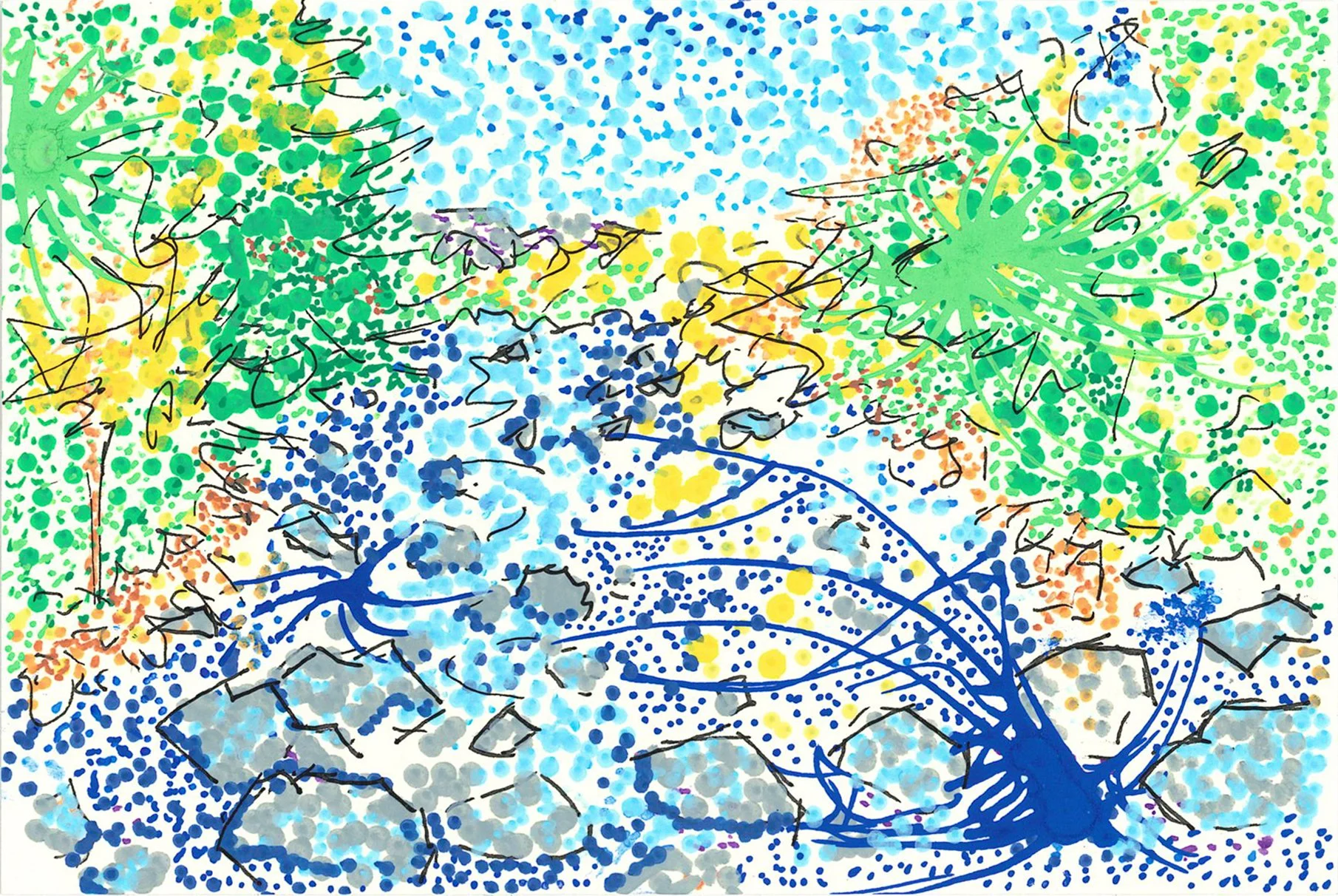
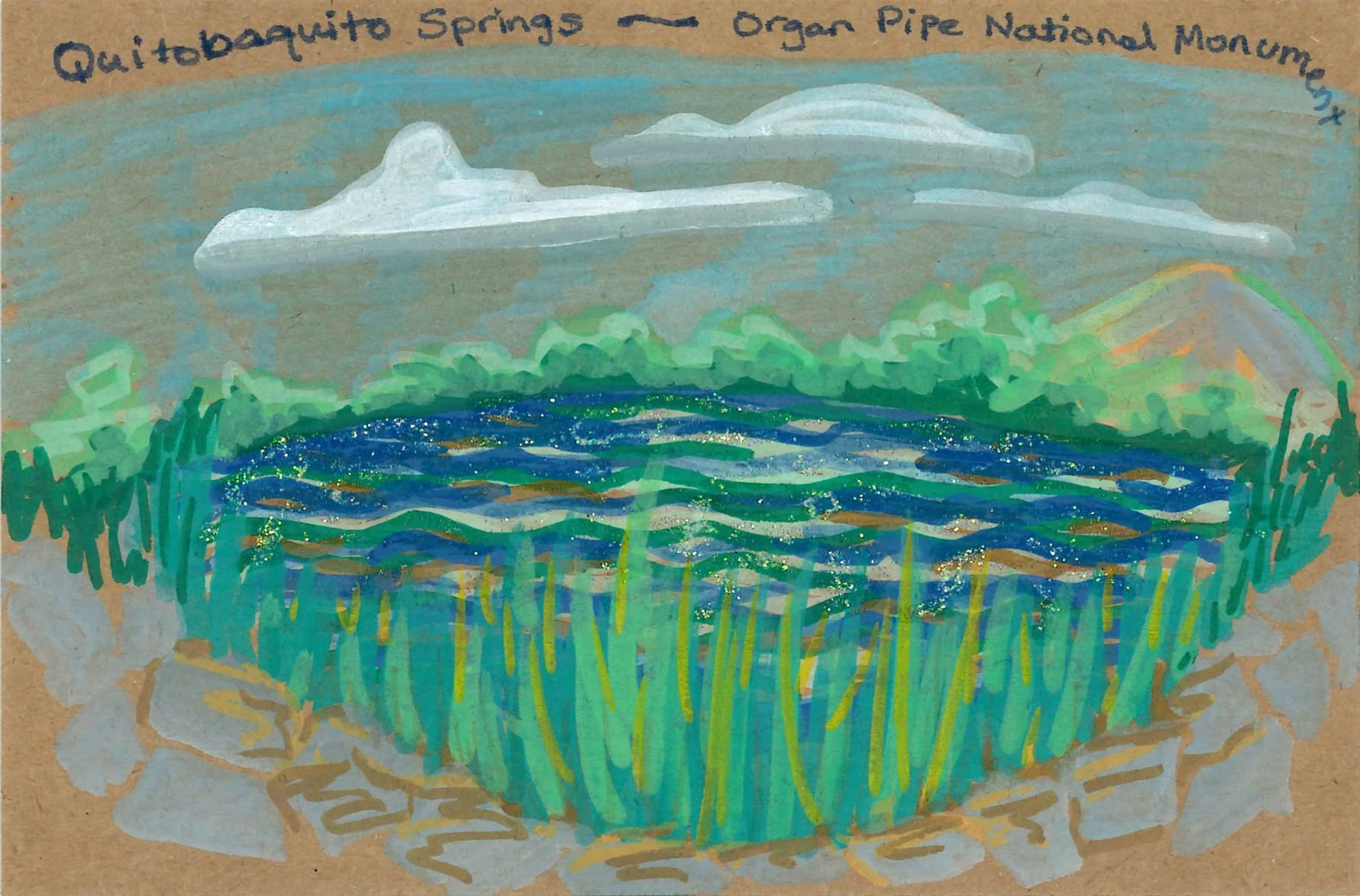
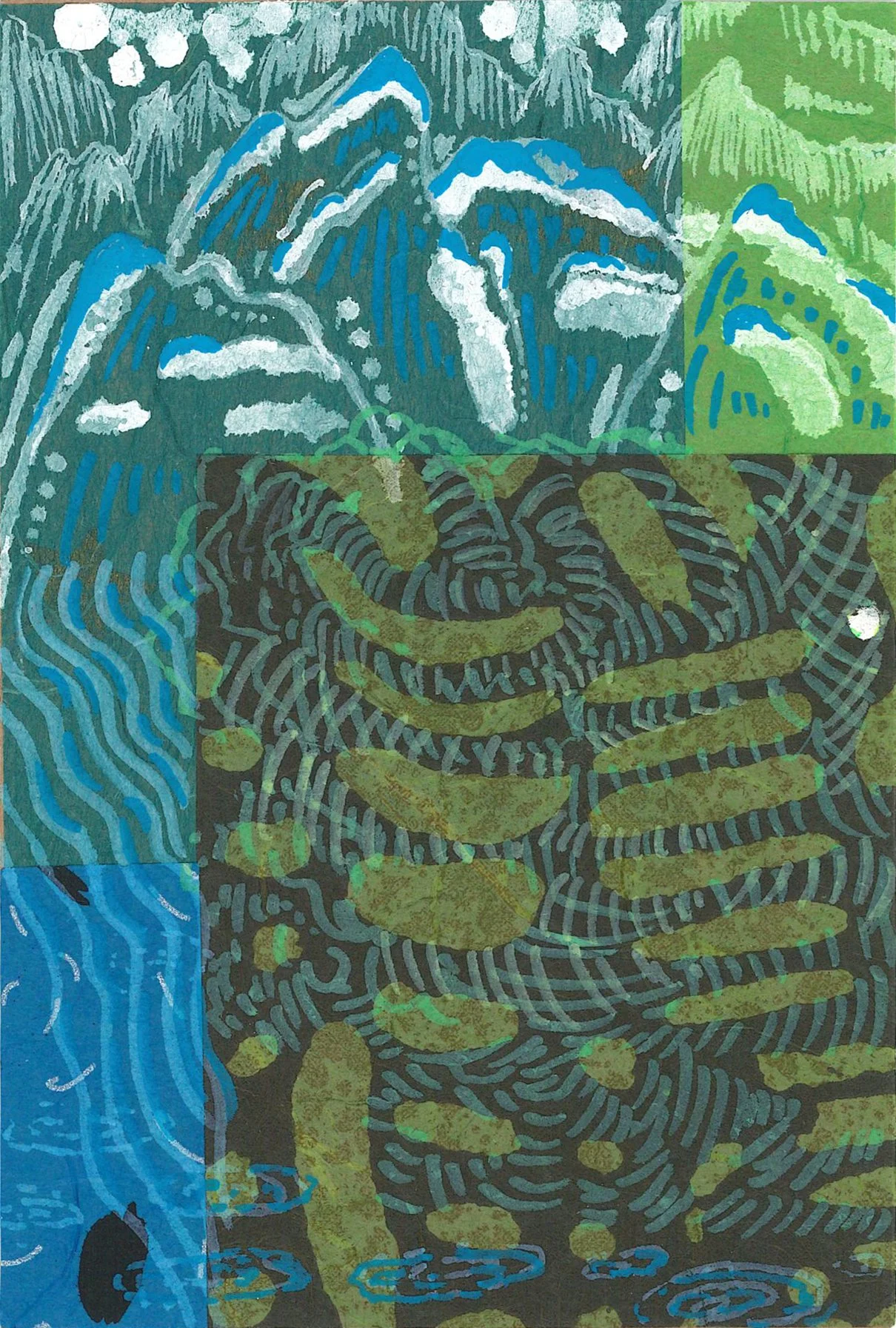
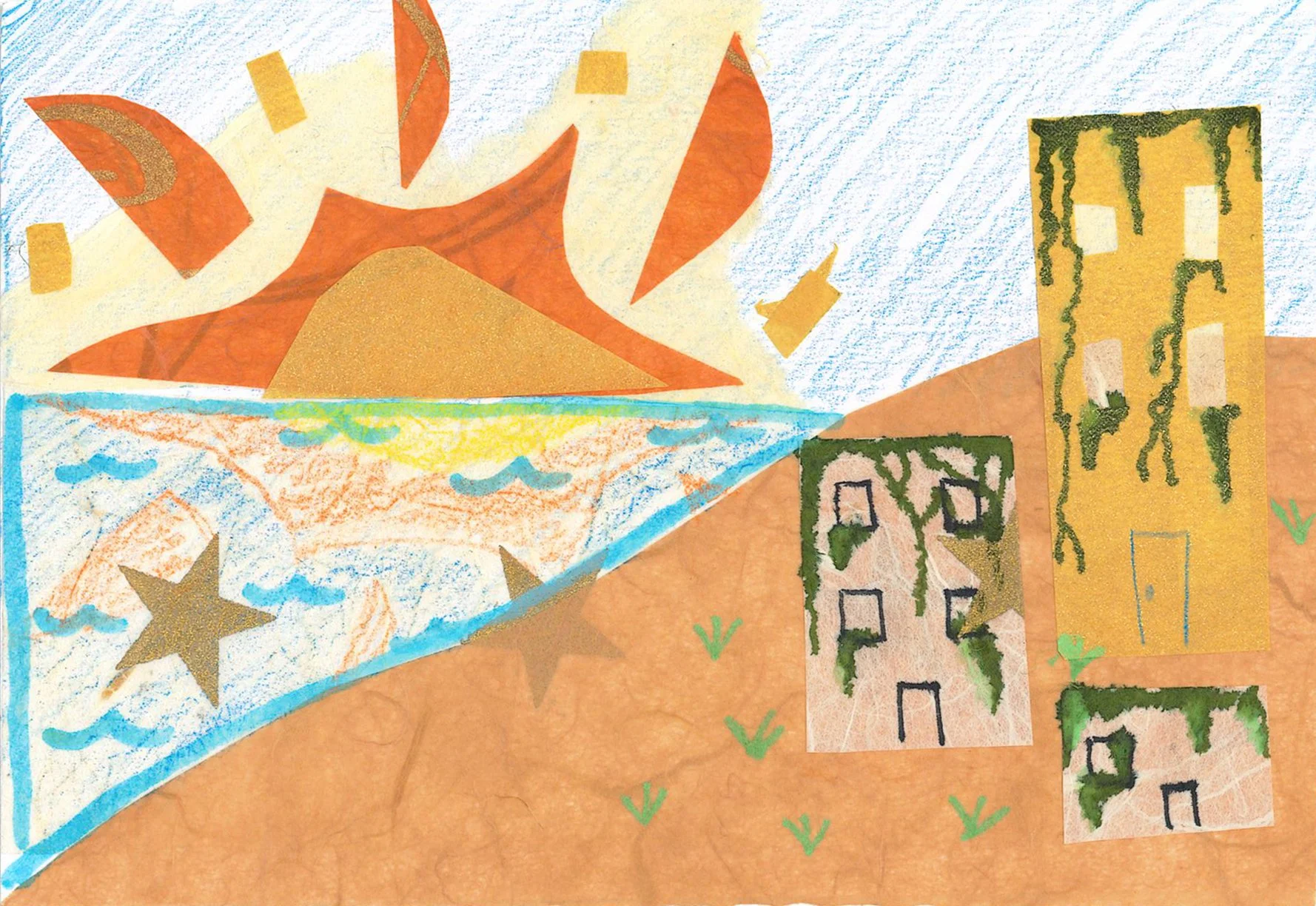
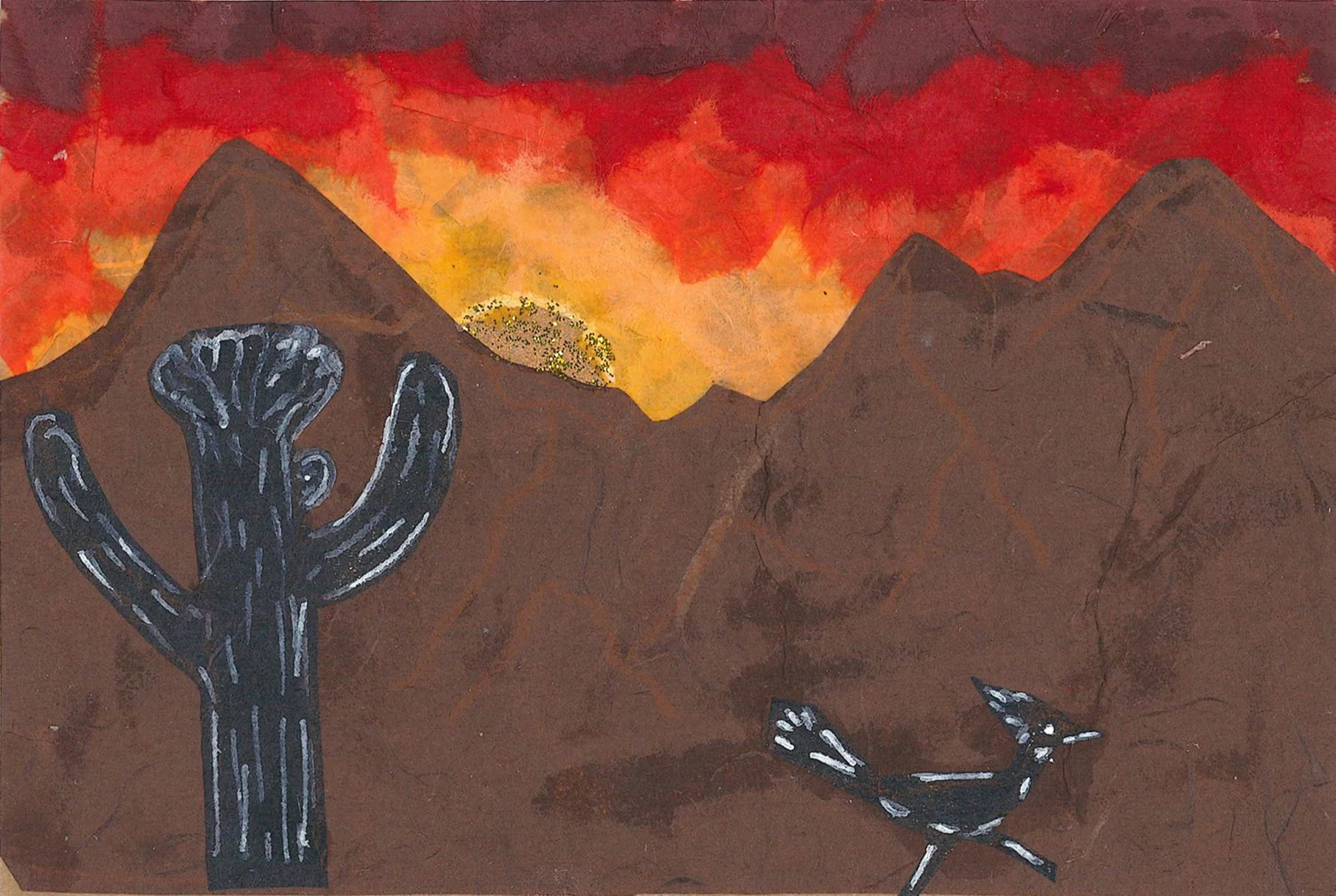
Participants shared what they chose to depict in their artwork. The majority drew on aspects of nature, place, family or home, with many noting the future and past. About a quarter of all participant postcards depicted an Arizona landscape.
Quotes
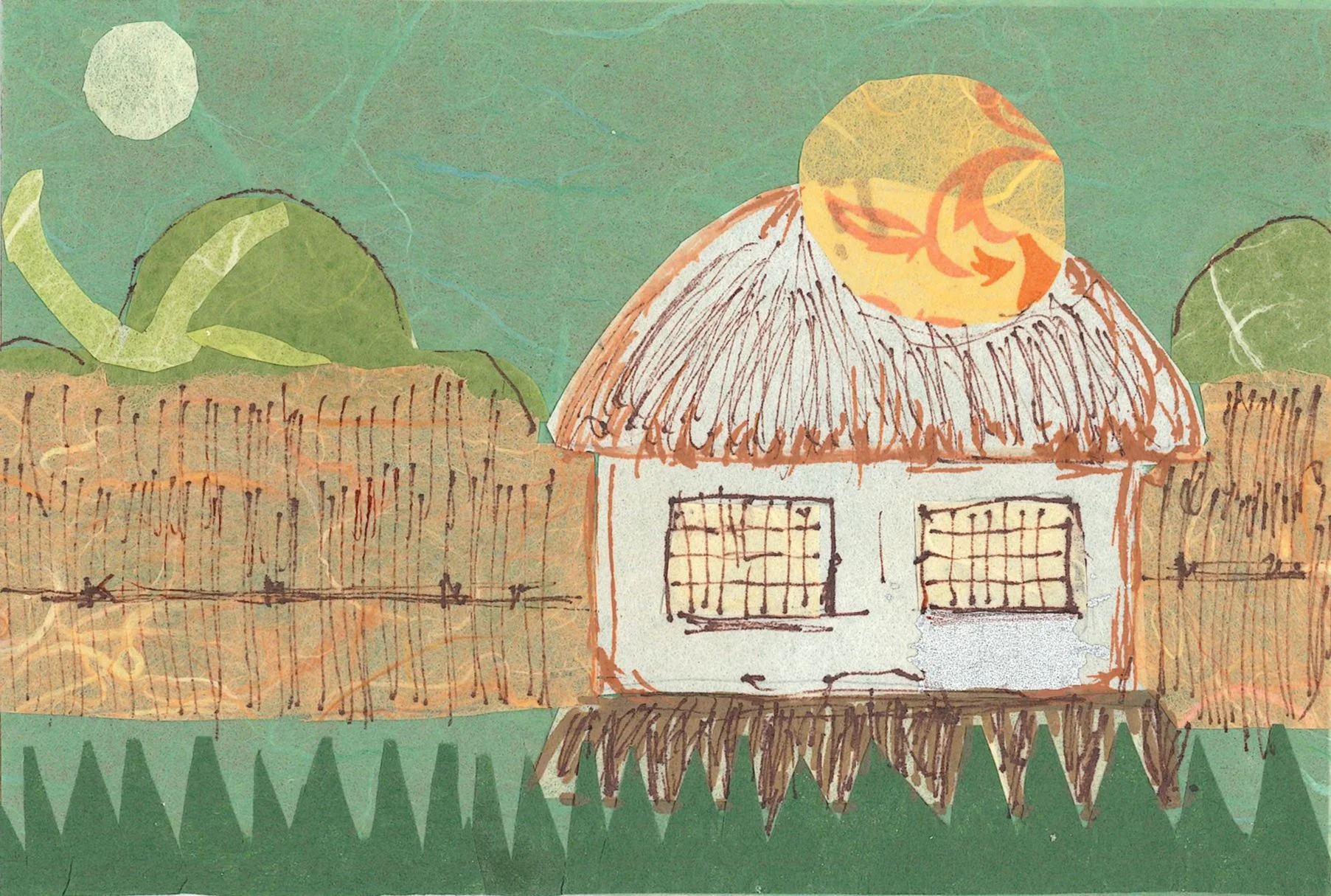
“The postcard of the place is here. The Sonoran Desert where I was born, and where my mom was born and my grandma was born... I did collage of the Tucson mountains because they’re my favorite. And another two things that are my favorite, which are crested saguaros and roadrunners.”
“I drew Sedona. I really love the red rock and how beautiful it is there... I wanted to share, showcase that beauty to other people.”
“I drew two mountains of textile waste that are framed on a gray sky and are very gross and dirty and stinky.”
Art Meaning
Key Takeaways
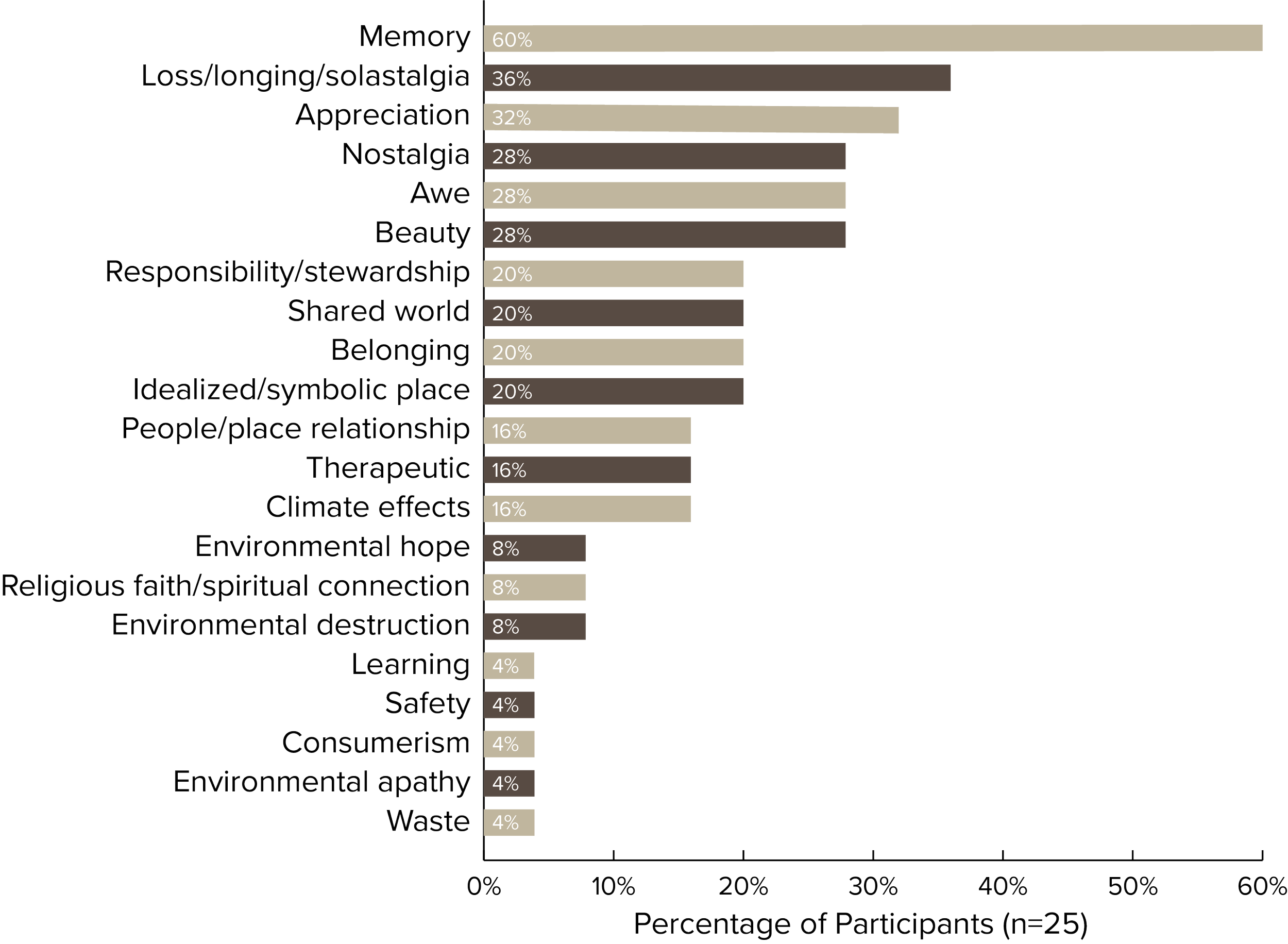
The meanings of the artworks, as described by the participants, are diverse and often multilayered. Participants frequently drew on their personal memories as inspiration (56%), a sense of belonging or connection they feel to a particular place (20%), or a specific relationship between people and place (16%).
Many participants described their artwork as an expression of feeling grief and ongoing loss due to climate change (36%) or simply nostalgia (28%). For some, their artwork conveys a sense of appreciation (28%) or awe (24%) for aspects of nature, while others wanted to highlight nature’s aesthetic qualities (24%) or emphasize the environment as part of our shared world (20%) and responsibility to care for this world (20%).
Quotes
“Sometimes I think, like, have you just not noticed how the Earth is very wonderful?”
“And I thought I would like to share this. This is probably the best thing I ever had. And what does it mean to me? Probably everything.”
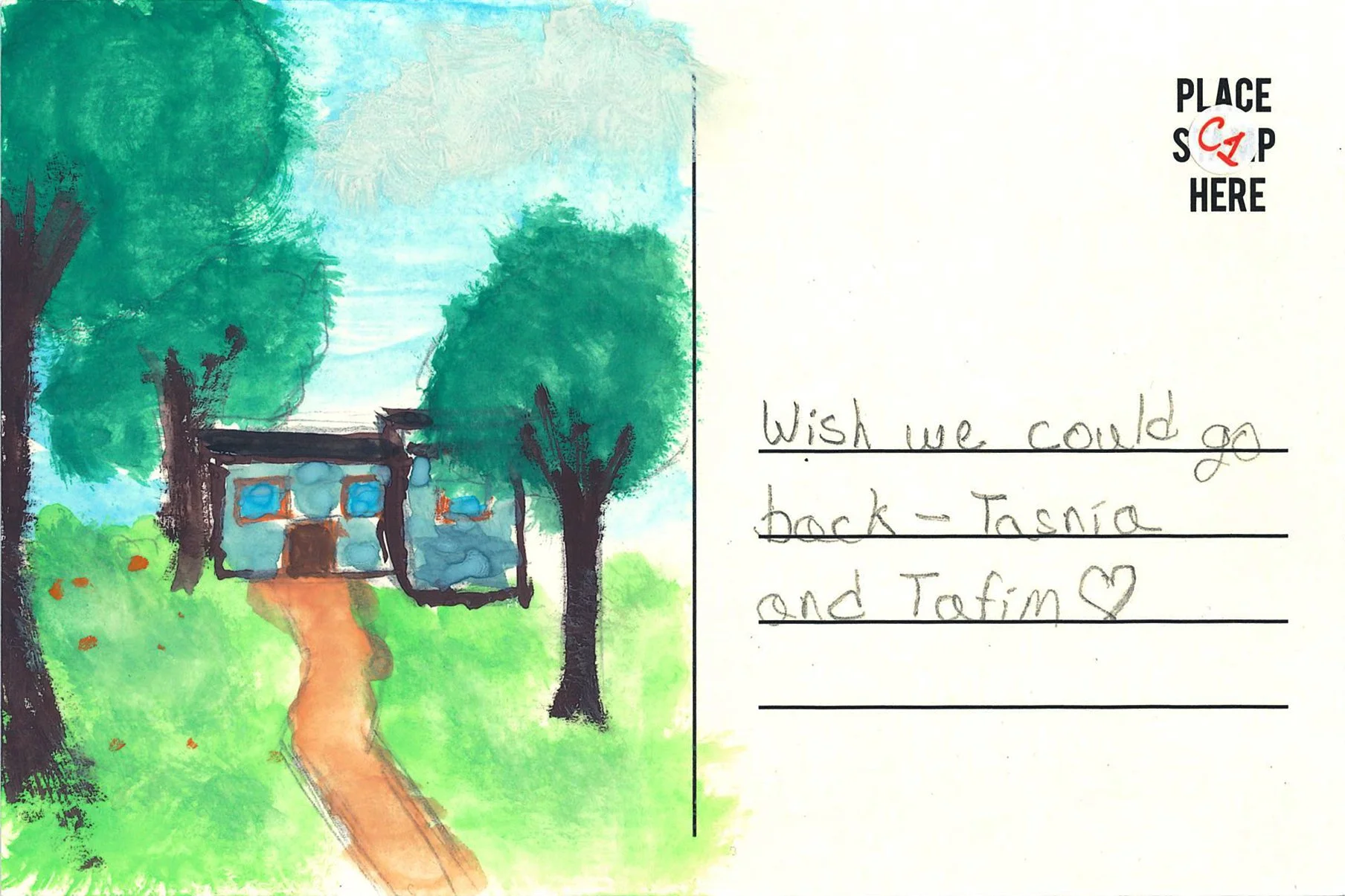
“[This is] a specific memory I have of not only specific person, but also a type of weather at a certain time of year that isn’t as common anymore.”
Postcard Addressees
Key Takeaways
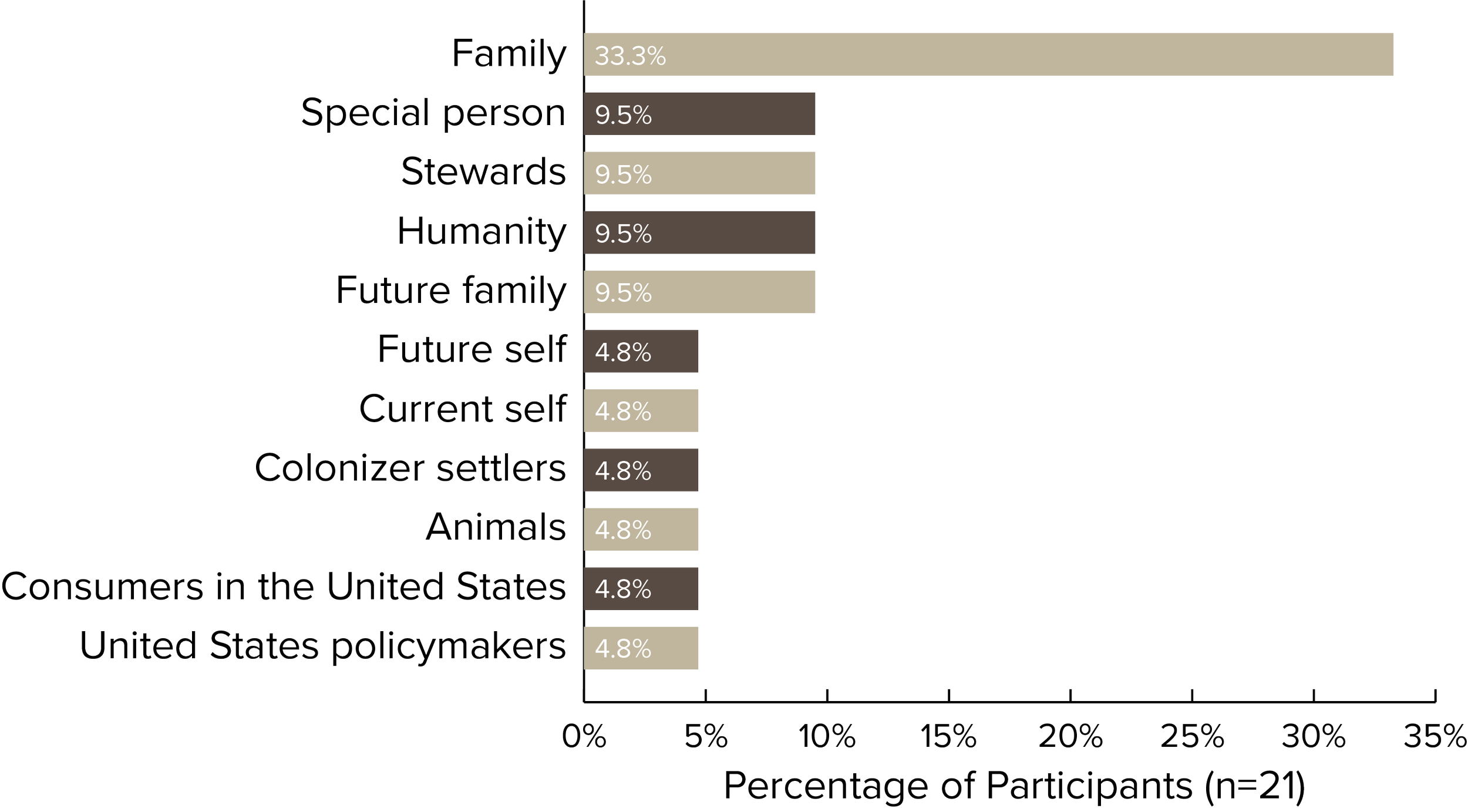
Overwhelmingly, participants addressed their climate postcard to family (28%). Less common was addressing their postcard to future family, humanity, a special person, and stewards of the environment (8%).
Quotes
“Probably family. I guess the instructions were like, draw a picture where you would like to share with someone. And I guess the place that I would like to share, I would say [is] my family.”
“I’m trying to say something to my children, grandchildren, and then they’ll say, “oh,” kind of like, remind them... how much I care about them and... for their safety. And that’s why that’s why I created [an] ideal safe space.”
Climate Emotions
What feelings, emotions, or thoughts arose for you as you made your artwork?
Are those feelings, emotions, or thoughts reflected in your artwork? If so, in what ways?
Climate Emotions Expressed in Workshops
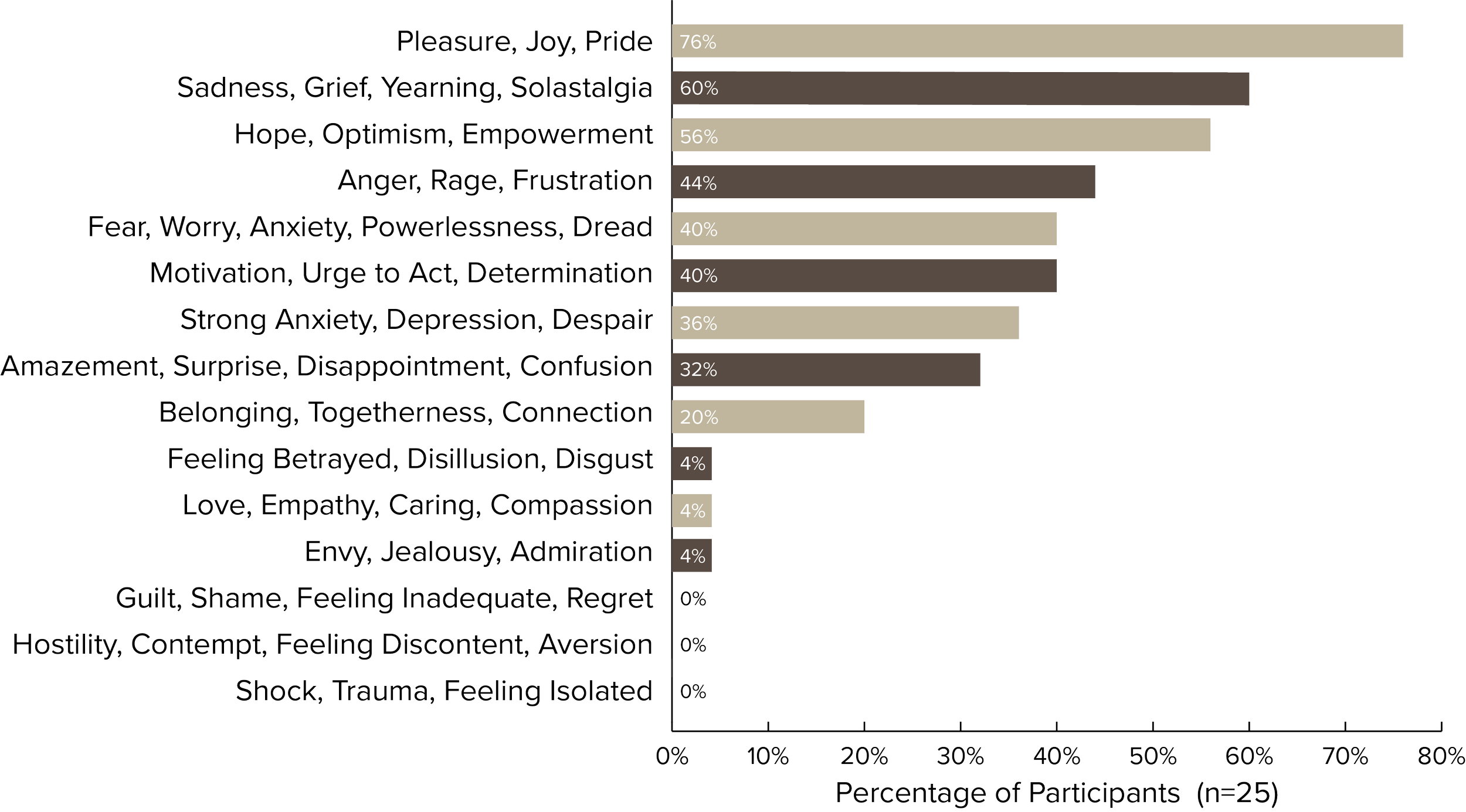
Solastalgia (definition): the distress caused by environmental change in one’s home environment (Albrecht et al., 2007).
Key Takeaways
Climate emotions are complex and fluid. Participants held negative emotions spanning forms of sadness (60%), frustration (44%), and fear (40%) simultaneously with many positive ones. While a majority of participants shared feelings of sadness (60%), conversations gravitated more towards positive emotions including joy (70%) and optimism (56%).
Participants described how the artmaking process shifted their focus to appreciation of nature and hope for the future. Predominant emotions shifted from surprise, fear, and anxiety at the start of the workshop to anger and many types of positive emotions by the end, suggesting the power of art and community in inspiring a sense of agency.
Quotes
“I feel kind of confused and I don’t know how to deal with climate change right now, because... [these] different feelings are all mixed together. I hope our world, our climate will become better. But... I feel kind of helpless and hopeless because I don’t have much power to build a better climate. So I really need... other people’s help.”
“I originally felt dissatisfied with the current state of the world right now, so I wanted to have a hopeful, creative experience where I try to see the good in things, and that’s why I feel very content with my artwork.”
References
Albrecht, G.; Sartore, G.-M.; Connor, L.; Higginbotham, N.; Freeman, S.; Kelly, B.; Stain, H.; Tonna, A.; & Pollard, G. (2007). Solastalgia: The distress caused by environmental change. Australasian Psychiatry, 15(Suppl.1). https://doi.org/10.1080/10398560701701288
Pihkala, P. (2022). Toward a taxonomy of climate emotions. Frontiers in Climate, 3. https://doi.org/10.3389/fclim.2021.738154
The Role of Artmaking in Climate Conversations & Action
How did the activity of artmaking contribute to the conversation? What role do you think artmaking has in climate action?
Role of Artmaking in Climate Conversations and Action
Key Takeaways
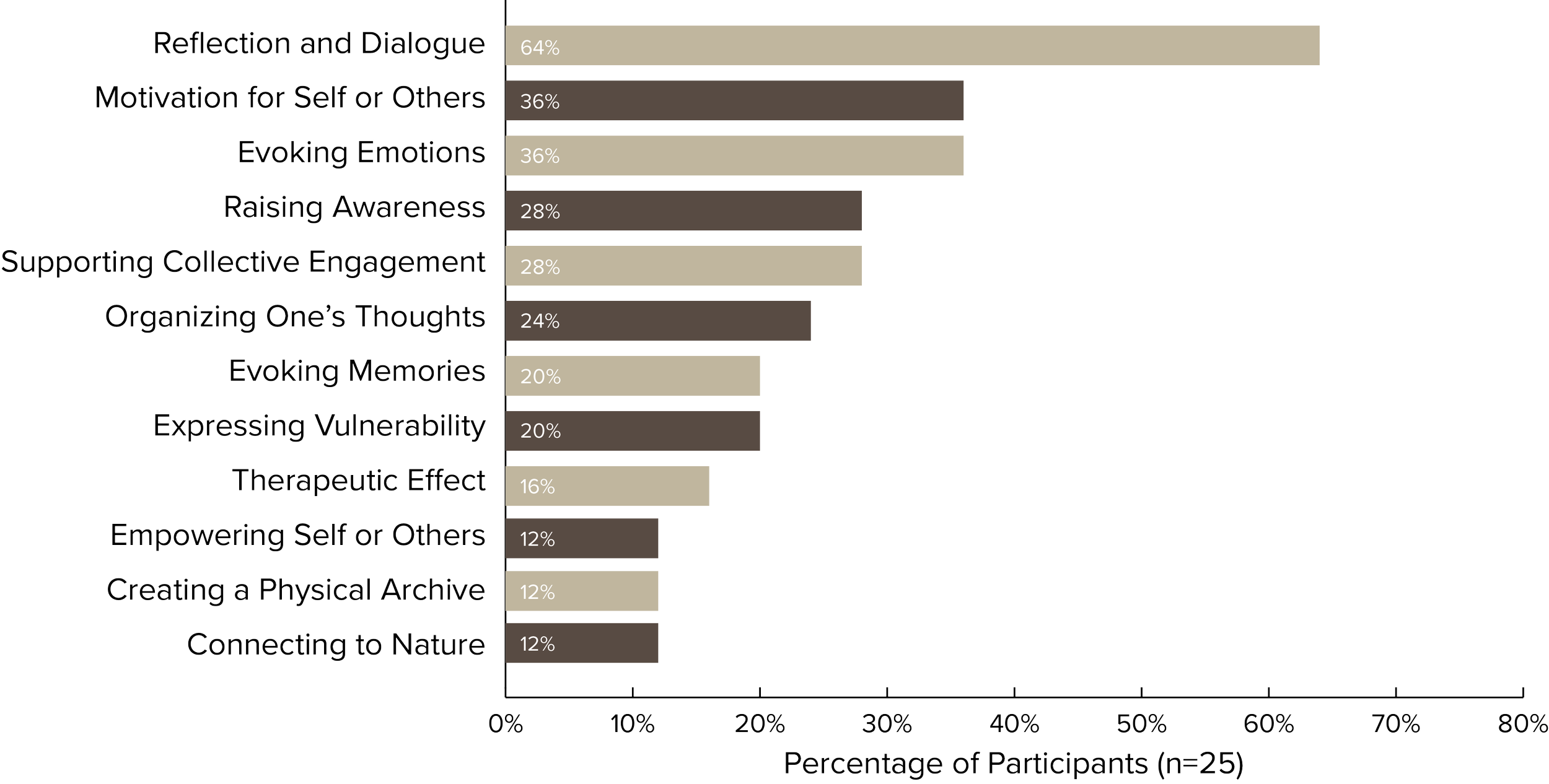
For most participants (64%), making art provided an opportunity to reflect on their experiences and memories and then share that reflection with others through dialogue. Many participants felt that the art process elicited emotions (36%) or memories (20%) that they may not have tapped into otherwise.
Collective artmaking helped inspire deep conversations around a difficult topic. Some participants (20%) said that creating postcards helped them be more open and vulnerable with one another, by sharing personal experiences with people they hadn’t met before.
Making art helped some participants (24%) cognitively organize and process their thoughts around climate change and how they feel about it.
A few participants (12%) recognized the power of artmaking in creating a physical and sharable archive of the present moment, that future generations could look back on and learn from.
Quotes
“[Making art] opened up some true feelings about how I feel toward climate change... I still have hope that things can change and that our future will be greener. At first I didn’t think I had that hope, but I do, truly.”
“[Art] opens up your vulnerability to other people and you’re able to have more deep conversations that are meaningful, especially for such a hard topic to talk about.”
“Long after us, maybe there will still be an archive of this, to show this is what the world is, and this is what it can be. This is at least what it used to be.”
“It helps us process complexity! Art should be central as a non-violent, transformative way to engage, document, and process.”
Climate Action
What action would you like to take toward addressing climate change?
Climate Actions
Key Takeaways
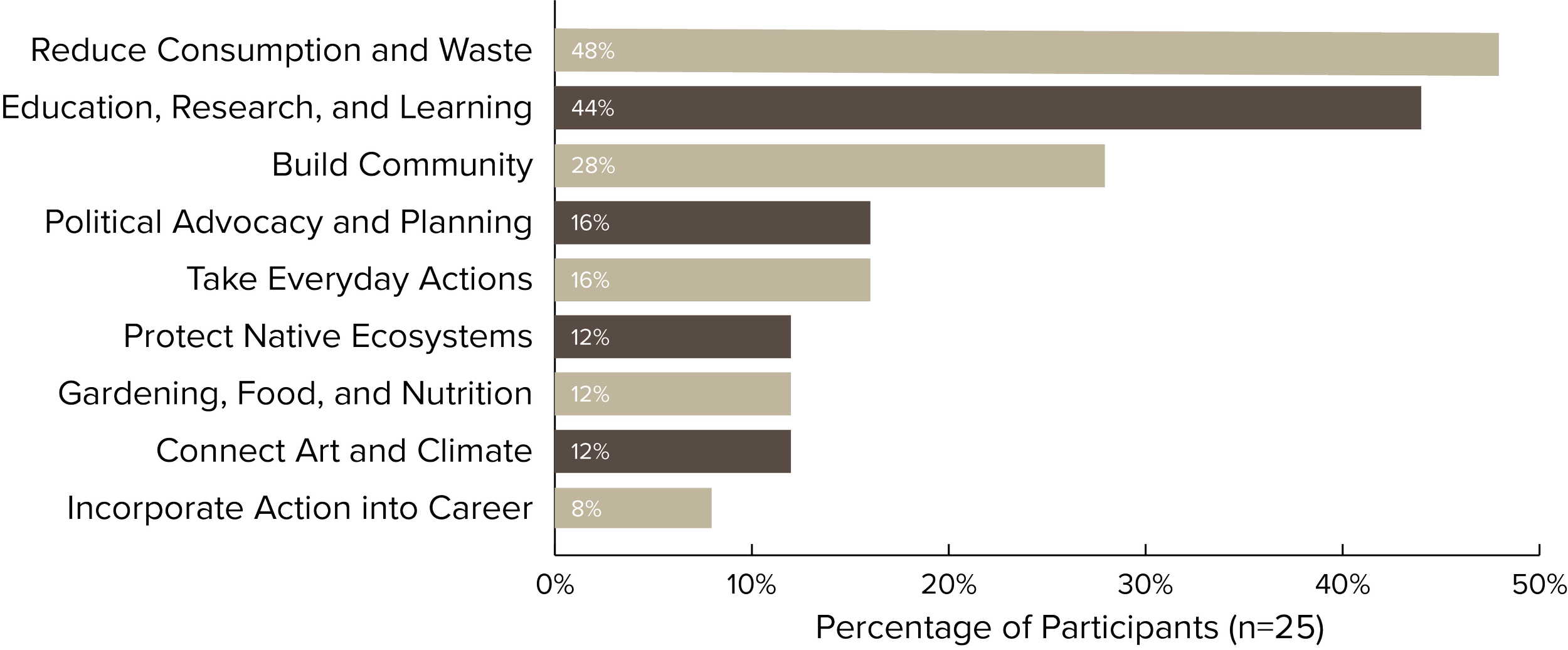
The three most common climate action responses fell into the following categories: reduce consumption and waste (48%); education, research and learning (44%); and building community (28%).
Many participants (44%) declared they have the knowledge, skills and ability to implement their climate action. Those who reported they lacked skills (36%), ability (24%), or knowledge (12%) identified a variety of opportunities for support including hands-on experiences, additional education, mentorship, and time management.
Participants expressed strong interest in making intentional choices that reduce their product consumption and energy use, as well as minimizing waste. Additionally, participants wanted to share information that could inspire climate action in others and to work collaboratively to meet community needs. University of Arizona investments that support these interests may empower students, staff, and faculty to take action.
Collective vs Individual Climate Actions
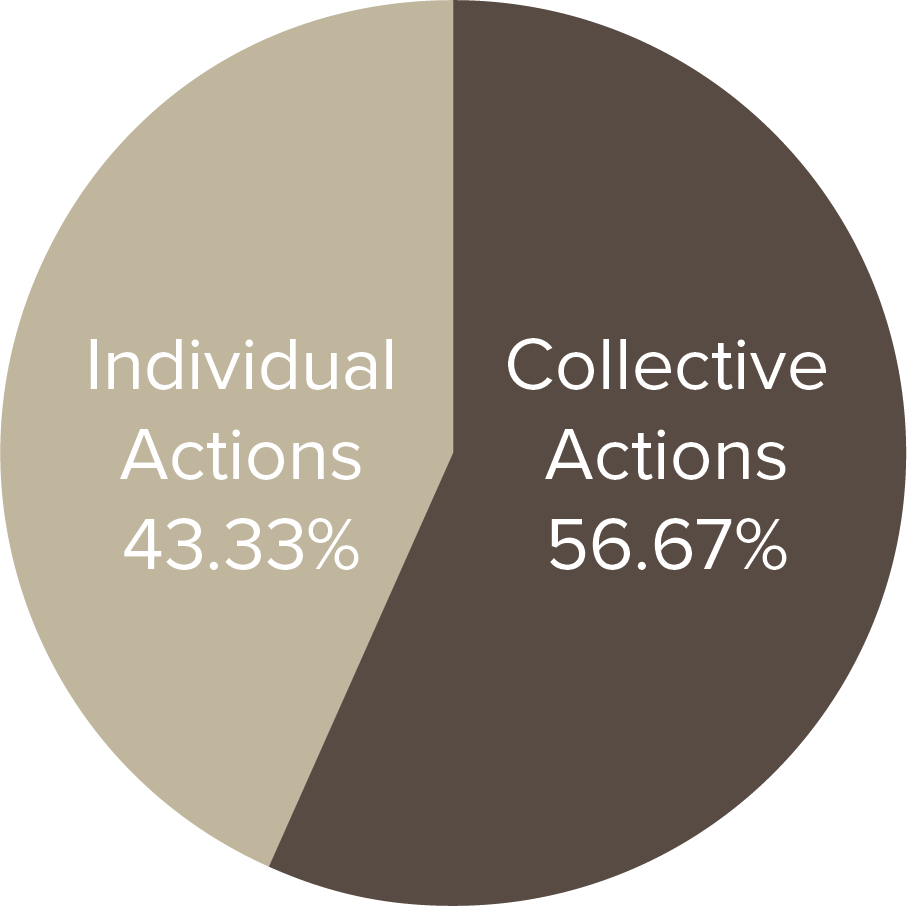
Participants identified a total of 30 climate actions that could be categorized as either individual or collective efforts. Reducing consumption and waste was the most common of the individual climate actions, while education, research and learning was the most commonly identified collective action.
Quotes
“Personal changes to how I live, mostly reducing waste (water, food, gas, clothing...) encourage others to be good stewards of the earth.”
“I want to make my backyard a sanctuary for pollinators, birds, and critters to help support them in our changing environment and share what I learn with others.”
“I know people from a lot of different aspects of U of A that can bring unique perspectives together to tackle climate action.”
Climate Action Venn Diagram
Participants received Ayana Elizabeth Johnson’s Climate Action Venn Diagram to help them identify their climate actions.
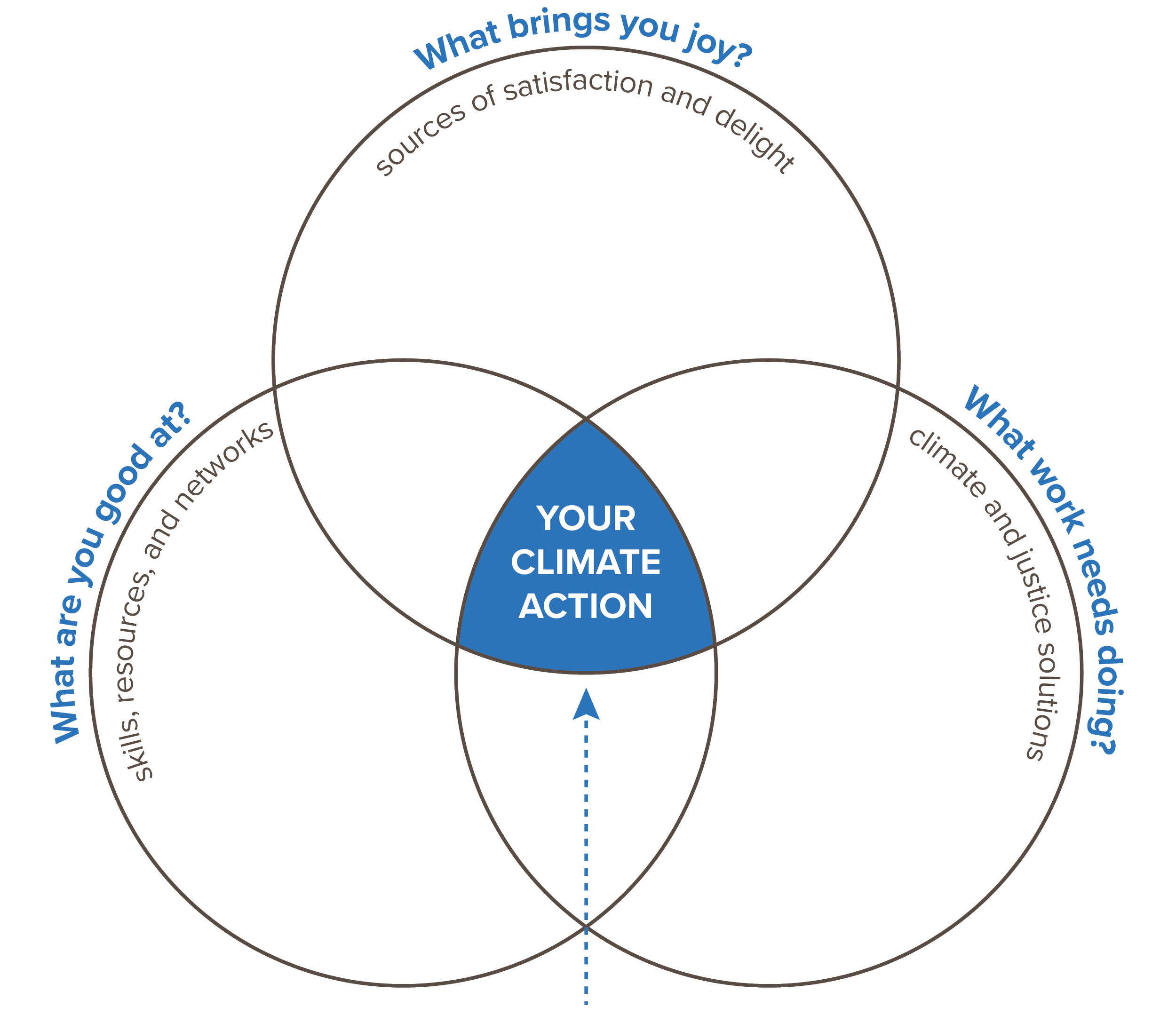
Johnson, A.E. (2022). Climate Action Venn Diagram. https://www.ayanaelizabeth.com/climatevenn
Get involved!
Want to contribute to the project or co-host a workshop in your community?
Check out our contact page!